
EU and Singapore Sign Digital Trade Deal
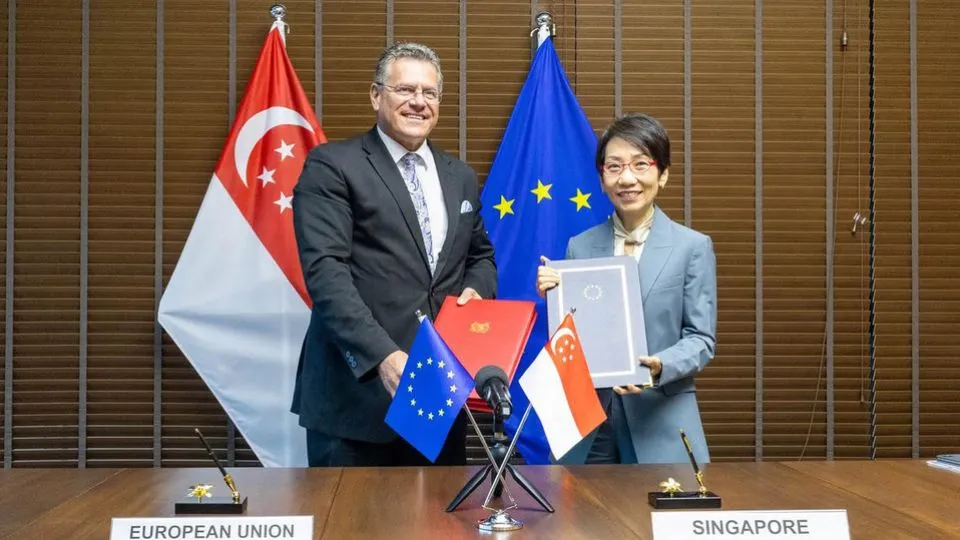
The European Union (EU) and Singapore have officially signed a Digital Trade Agreement (DTA), after receiving final approval from the Council. The signing took place on 7 May 2025 in Singapore, with Minister for Trade Relations Grace Fu and EU Commissioner Maroš Šefčovič representing both sides.
This is the EU’s first dedicated digital trade deal with a non-EU country, even as talks continue with South Korea. Singapore has already made similar agreements with the UK, South Korea, Australia, Chile, and New Zealand. The DTA complements the existing EU-Singapore Free Trade Agreement, aiming to create a trusted, compatible, and innovative digital economy between both regions. It could also set a global example for future digital partnerships.
The DTA supports the EU’s larger plan to boost digital ties with countries in the Indo-Pacific and fits with Singapore’s goal to be a leading digital hub. It also strengthens economic links between the two partners and underlines their shared support for an open and transparent digital space.
What Businesses Can Expect
| Key Benefits | |
| Data Transfers | No unnecessary rules on data storage, allowing smooth cross-border data flows. Useful for finance, logistics, cloud, and e-commerce. Companies get more legal clarity and lower compliance costs. |
| Data Protection | Strong privacy rules remain in place. Both parties commit to respecting GDPR and PDPA, ensuring safe and trustworthy data use. |
| Digital Infrastructure | Mutual recognition of tools like e-signatures and e-invoicing. This reduces costs and speeds up cross-border digital processes. |
| SMEs and Inclusion | Support for small businesses through better access to tools, training, and online resources to help them sell internationally. |
| Emerging Tech | Encourages cooperation on new tech such as AI, blockchain, and digital IDs. Focuses on reducing barriers and promoting responsible innovation. |
| Cybersecurity | Joint efforts to boost cybersecurity, including sharing best practices and improving digital security across trade systems. |
The agreement will now go through approval by the European Parliament and ratification on both sides before it becomes active.